Machine picker
Choose a boba cup sealer size
Match the machine to your cup rim, cup volume, and daily drink count before comparing brands. A cheap sealer is expensive if it forces you to replace cups, film, or cutter rims.
Good default for most 16 oz PP cold cups and shops that sell more than a few dozen drinks daily.
Measure the outside rim of the cup, not the drink volume. A 16 oz cup can still use a 90mm, 95mm, or 98mm rim.
What is a boba cup sealer machine?
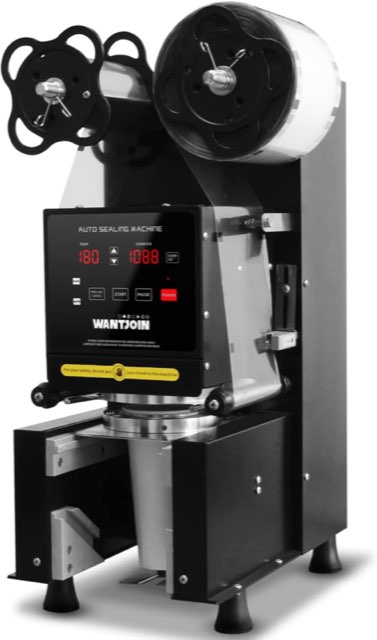
A boba cup sealer machine is a countertop machine that pulls sealing film over a cup, heats the film, and cuts it to the cup rim. The sealed lid is what lets customers poke through the top with a pointed boba straw without using a plastic dome lid.
Most commercial bubble tea cup sealers are used for cold PP or PET cups. Some machines also support paper cups, but that depends on the cup, film, and heating setup. Do not assume a machine can seal every cup material just because it says “bubble tea” in the product name.
Current supplier listings show the common commercial range clearly. Boba Tea Direct lists an automatic universal-base sealer at $1,699 with a 450 cups-per-hour sealing rate and 92mm, 95mm, and 98mm cutter-base compatibility. LollicupStore lists a Karat 95mm UL EPH classified sealer at $1,440. WebstaurantStore lists a Bossen 95mm PP automatic sealer at $1,759 with a 450 cups-per-hour output, 110V power, and 400W draw.
Sources checked May 10, 2026: Boba Tea Direct automatic sealing machine, LollicupStore Karat 95mm cup sealing machine, and WebstaurantStore Bossen 95mm PP cup sealing machine.
Boba cup sealer machine size chart
| Sealer size | Best for | Watch out for |
|---|---|---|
| 90mm | Smaller PP cups, some compact cold drink menus | Not every supplier stocks film and cutter rims as widely as 95mm |
| 95mm | Many 16 oz PP boba cups and common starter setups | PET cups may need a different rim or machine setup |
| 98mm | Wider PET cups and some 24 oz cups | Check machine height if using tall cups |
| Universal base | Shops that use more than one cup rim size | Extra cutter rims may cost more and may be sold separately |
Measure the outside rim of the cup in millimeters. The cup volume printed on the case does not tell you the rim size. If your menu uses 16 oz and 24 oz cups from different suppliers, measure both.
Automatic vs manual boba sealer
| Machine type | Good fit | Rough buying range | Practical tradeoff |
|---|---|---|---|
| Manual cup sealer | Test kitchens, pop-ups, very low-volume counters | Often under $300 to $700 | Lower upfront cost, slower service |
| Automatic 95mm sealer | Most small boba shops using one main cup size | About $1,400 to $1,800 from current U.S. supplier examples | Better speed and consistency |
| Automatic universal-base sealer | Shops switching between 92mm, 95mm, and 98mm cups | Around $1,700 and up in current examples | More flexible, but confirm extra cutter rims |
| High-spec commercial sealer | Busy shops, kiosks, multi-location purchasing | Varies by brand and certification | Pay for support, certification, and downtime reduction |
If you expect more than 60 to 80 sealed drinks a day, an automatic sealer usually makes more sense. The labor saved during rush periods matters more than the spec sheet. If you are still testing a menu or selling at occasional events, a manual machine can be enough.
How much does a boba cup sealer cost?
A new automatic boba cup sealer from U.S. restaurant and bubble tea suppliers commonly sits around $1,400 to $1,800 before accessories, based on current listings checked for this update. Manual machines can be much cheaper, but they are usually a fit for testing, not a busy shop.
Budget for more than the machine:
- Sealing film rolls that match your cup material and rim size.
- Extra cutter rims if you plan to use more than one cup diameter.
- Sample cups before committing to full cases.
- Shipping, warranty terms, and return restrictions.
- Downtime risk if the machine has weak parts support.
The cheapest machine is rarely the cheapest setup. A sealer that saves $400 upfront can become a bad buy if it only works with cups you do not like, film you cannot source reliably, or a voltage setup that does not match your counter.
What to check before you buy
Use this checklist before ordering a bubble tea sealing machine:
- Cup rim size: 90mm, 95mm, or 98mm.
- Cup material: PP, PET, paper, or a mix.
- Cup height: tall 24 oz cups can hit machine limits.
- Film type: PP film, PET-compatible film, clear film, printed film, or paper-cup film.
- Electrical requirements: most U.S. listings use 110V, but imported machines can vary.
- Output: 450 cups per hour is common on automatic supplier listings, but your staff will move slower than the machine rating.
- Certification: check UL, EPH, NSF-related claims, and local inspection expectations.
- Warranty and returns: machines may have short warranties and stricter return terms than normal supplies.
If you have not chosen cups yet, start with sample cups and a supplier that sells the matching film. It is easier to build a purchasing stack around one supplier than to force random cups, film, and machine parts to work together.
Boba sealing film and cup compatibility
Sealing film is not universal. A 95mm PP film roll may not seal the same way on a PET cup. Paper cups can need different film and heat settings. Printed films are useful for branding, but plain clear film is easier when you are still testing cup suppliers.
For a simple first setup, pick one cup family:
- PP plastic cups with matching PP sealing film for a standard milk tea menu.
- PET cups if you prefer clearer cups, then confirm the machine and film are PET-compatible.
- Paper cups only if the supplier explicitly says the machine, film, and cup are made to work together.
Link this page with your cup purchasing plan. The bubble tea cups guide covers cup materials and sizes, while the boba straw guide explains why sealed-film cups need pointed straws.
Cleaning and maintenance
Clean the sealing area daily. Sugar, tea, fruit syrup, and stray toppings make the cutter and heating area sticky, which leads to bad seals.
Basic routine:
- Turn the machine off and let hot parts cool.
- Remove loose film, cup scraps, and sticky residue from the tray and cutter area.
- Wipe the outer surface with a damp cloth.
- Clean the cup holder and sealing area using the manufacturer’s instructions.
- Run a few test seals before opening service.
Do not scrape the heating plate with anything that can damage it. If film stops sticking, check the film direction, temperature setting, cup material, and rim size before blaming the whole machine.
Troubleshooting
| Problem | Likely cause | What to try first |
|---|---|---|
| Film does not stick | Wrong film, low heat, wet cup rim | Dry the rim, check film type, adjust temperature |
| Film tears or wrinkles | Film loaded off-center | Reload the roll and test with empty cups |
| Cup is crushed | Cup holder or tray is wrong | Check cup height and rim diameter |
| Seal leaks on one side | Cup not seated flat | Clean the tray and check alignment |
| Machine misses the cup | Sensor or cup holder issue | Clear residue and review the manual |
Most sealing problems come from compatibility or setup, not from the machine being broken. Keep a small batch of known-good cups and film for testing. That makes it easier to tell whether the issue is the new supply order or the sealer.
FAQ
What size boba cup sealer do I need?
You need the sealer size that matches your cup rim diameter, usually 90mm, 95mm, or 98mm. Measure the outside rim of your actual cup sample before ordering the machine, cutter rim, or film.
Is a 95mm or 98mm cup sealer better for boba?
Neither size is automatically better. A 95mm sealer is common for many PP boba cups, while 98mm is common for wider PET cups and some larger drink formats. The right choice is the one that matches your cups.
Should a new bubble tea shop buy a manual or automatic sealer?
A new shop should buy automatic if it expects steady daily drink sales. Manual sealers can work for recipe testing, markets, or very low-volume counters, but they slow service when several customers order at once.
How many cups per hour can a boba sealing machine seal?
Many automatic supplier listings advertise around 450 cups per hour, but real service speed depends on staff, cup staging, drink assembly, and payment flow. Treat the machine rating as a ceiling, not your actual counter throughput.
Can one boba sealer work with different cup sizes?
Some machines can work with multiple rim sizes if they have a universal base or swappable cutter rims. Check what comes in the box. Extra rims for 90mm, 92mm, 95mm, or 98mm cups may be sold separately.
Does a cup sealer work with paper cups?
Some cup sealers support paper cups, but only with the right cup and film combination. Confirm paper-cup compatibility in the supplier specs before buying, especially if your shop wants to move away from plastic cups.
What causes boba sealing film to leak?
Leaks usually come from mismatched cup and film material, the wrong rim size, a wet or sticky cup rim, low heat, off-center film, or a cup that is not seated flat in the tray.
Is a boba cup sealer worth it?
A boba cup sealer is worth it for shops selling drinks to-go because sealed film reduces spills and gives the drink the standard bubble tea experience. For occasional events or very low volume, start with a manual sealer or test with lidded cups first.