Where Mixue came from
The chain started in Zhengzhou, China, in 1997 as a single shaved ice stand. It grew steadily through the 2000s, then exploded in the 2010s on a simple formula: cheap drinks, cute mascot (a snowman holding an ice cream cone called “Snow King”), aggressive franchise model, and centralized supply chain that kept ingredient costs low.
By 2022 it was the biggest tea chain in China by unit count. By 2024 it had crossed into Southeast Asia — Vietnam, Indonesia, Thailand, Malaysia, the Philippines. The expansion to the US in 2025 was the last piece. Australia and the UK are expected later in 2026.
The business model is deliberately budget-focused. Drinks in China retail for $1-2. In the US, the first stores are running $3-5, which is still roughly half what Gong Cha or Kung Fu Tea charge.
What’s on the Mixue menu
Three main categories:
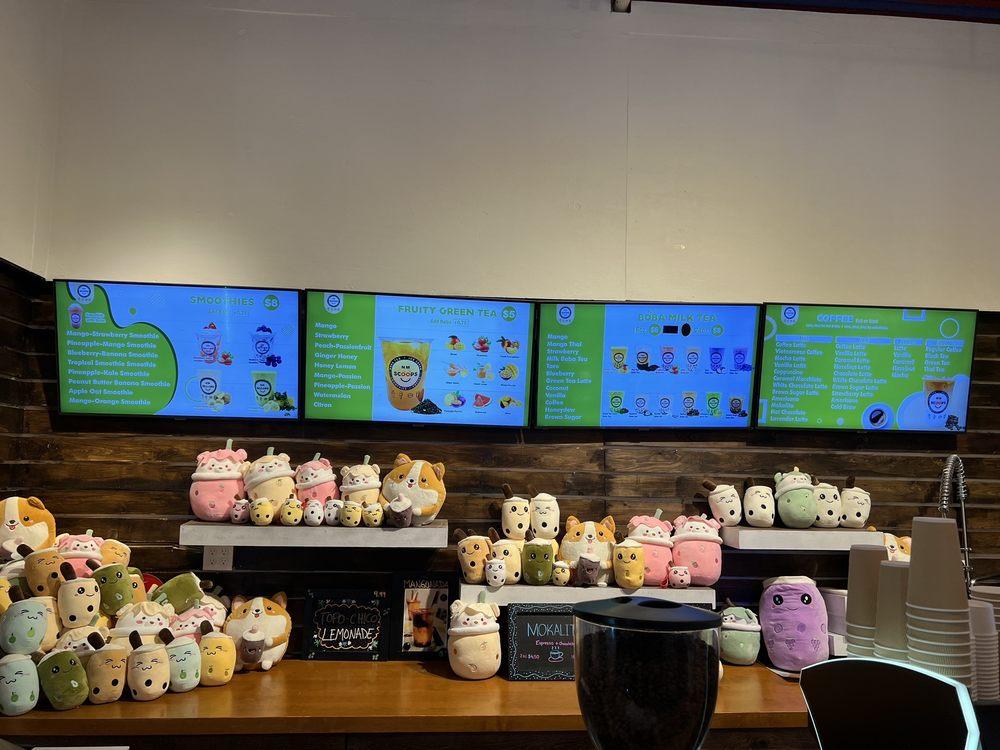
Boba drinks. Classic pearl milk tea, brown sugar milk tea, matcha milk tea, fruit teas with pearls. Sweet defaults. Standard Taiwanese-style recipes, not innovative but consistent.
Fruit teas and lemonades. Fresh fruit teas are a strong category, mango, strawberry, peach, lemon. Heavily marketed as using “real fruit,” which is partially true; they do use fresh fruit puree blended on demand.
Ice cream cones. The original Mixue hit. A basic soft-serve vanilla cone sells for $0.99-1.50 depending on the region. In China, these are the signature volume driver. In the US, they’re listed as a novelty alongside the drinks.
The menu at US stores is slightly pared-down compared to Chinese Mixues. No durian milk tea, no regional specialties. But the core 20-30 drinks are all there.
Price and value
This is the real pitch. A 20-oz fruit tea at Mixue US is about $3.50. The same size at a Kung Fu Tea is $6-7. That’s a 40-50% discount.
Ingredient-for-ingredient, Mixue drinks use cheaper bases, more concentrate, less fresh-brewed tea, more powder blends. The fruit teas use pre-portioned frozen fruit rather than hand-cut fresh. The pearls are usually pre-cooked in centralized kitchens and reheated on site.
None of that makes the drink bad. It makes it consistent and cheap. Whether you care about the fresh-brewed-vs-powder distinction depends on how much of a boba snob you are.
How it actually tastes
Honest review after trying several items at the Hollywood store:
Classic milk tea: sweet, creamy, forgettable. Fine, not great. Tea flavor is weak — you’re mostly drinking milk and sugar.
Brown sugar boba: sweet to the point of syrupy. The tiger stripes are there but less theatrical than Tiger Sugar. At $4 instead of $7, it’s a reasonable trade-off.
Fresh mango fruit tea: actually good. Real fruit chunks, not mango-syrup-in-water. Probably the best-value item on the menu.
Lemonade with popping boba: very sweet, decent popping, not as refreshing as you’d hope. Pass.
Vanilla ice cream cone: solid. Closer to Dairy Queen than to a gelato place. Strongly recommend as the add-on.
Overall: B- drinks at C+ prices. The ice cream is a B+. Nothing is bad. A few things are notably better than their price class.
How Mixue compares to other chains
Versus Gong Cha: Gong Cha makes better tea, worse value. Mixue makes cheaper drinks with weaker tea.
Versus Kung Fu Tea: Kung Fu has more variety, slightly better ingredients, 50% higher prices.
Versus Tiger Sugar: Tiger Sugar is premium brown sugar specifically, Mixue is everything-boba-but-cheaper. Different positioning.
Versus Chagee: Chagee is premium Chinese tea focused on whole-leaf quality. Mixue is the opposite end of the Chinese boba spectrum, mass market, budget, volume.
Versus local specialty shops: no contest. Good specialty shops beat Mixue on quality by a wide margin. Mixue beats them on price and speed.
Where Mixue is opening next in the US
Confirmed or rumored as of early 2026:
- Additional LA stores (Pasadena, San Gabriel Valley)
- New York City (Chinatown, Flushing)
- Seattle
- Bay Area (Milpitas area first)
- Orange County
The aggressive franchising model means once they get unit economics working, they expand fast. Expect 50-100 US stores by end of 2026, possibly more.
Should you go?
If you live near one and you drink boba: yes, at least once. It’s cheap, fast, and the fresh fruit teas are legitimately good. It’s not going to replace a good specialty shop, but it slots into the “quick cheap fix” slot that was previously only occupied by 7-Eleven teas and mall food court options.
If you haven’t been, the one thing that matters is how you manage the line. The Hollywood store has had two-hour waits in opening months. The Chinatown store is calmer. Time your visit accordingly.
One ordering tip: the fruit teas are the best value and the best quality at Mixue. The milk teas are fine but not the point. Get a fresh mango green tea with popping boba, and add a cone for another dollar.
Bottom line
Mixue is a cheap, fast, consistent boba chain with more global stores than any other. The US versions are slightly pared down but keep the budget pricing. Drinks are 6/10 at 4/10 prices, which is a win. The ice cream is a surprise positive. Lines are currently long but will normalize as more stores open.
If you’ve never had Mixue, you will soon. It’s coming to your city.