What counts as milk tea
“Milk tea” is any beverage that combines tea and milk. That’s it. Every culture that drinks tea has some version.
The categorization gets interesting when you look at how each culture handles three questions:
- What tea base?
- What kind of milk?
- How is it prepared?
Those three questions define the entire global map of milk tea.
What makes boba specifically boba
Boba is Taiwanese pearl milk tea. The defining features:
- Tea base: usually black, sometimes green, oolong, or flavored.
- Milk: dairy, non-dairy creamer, or plant milk.
- Sweetener: sugar syrup, brown sugar, honey. Usually adjustable.
- The key ingredient: tapioca pearls. Marble-sized balls of cassava starch, chewy, sitting at the bottom.
- Preparation: shaken over ice and served cold with a wide straw.
Take away the pearls and you have “Taiwanese milk tea.” Still a milk tea, just not boba.
Some US shops also call bursting/popping tapioca “boba.” Technically different — popping boba is fruit-juice-filled alginate spheres, invented around 2003, much more recent than tapioca pearls. For the purposes of “is this boba,” popping counts. For purposes of “is this traditional Taiwanese boba,” no.
Hong Kong milk tea
The thickest, strongest milk tea in common circulation. Served hot or cold, always with evaporated or condensed milk, made with a proprietary blend of Ceylon black teas. The tea is brewed through a cloth bag that darkens over use, the “pantyhose” or “silk stocking” in the name “silk stocking milk tea.”
Flavor: robust, slightly bitter, creamy without being sweet. A Hong Kong milk tea at a cha chaan teng is much less sweet than a Taiwanese boba. Sweetness is added at the table.
No pearls, traditionally. A few fusion places in the UK and Canada add pearls now. Purists won’t call it Hong Kong milk tea at that point.
Malaysian teh tarik
“Pulled tea”, the name comes from the preparation. A Malaysian or Singaporean cha tarik uses strong Ceylon black tea pulled back and forth between two vessels to aerate it, creating a thick froth on top. Milk is condensed and sweetened.
Flavor: rich, foamy, very sweet. The pulling technique matters — it changes the texture and temperature.
No pearls. Different drink from boba, same condensed-milk family as Hong Kong milk tea.
Indian masala chai
Black tea brewed with milk and spices, cardamom, ginger, cinnamon, cloves, black pepper, sweetened with sugar or jaggery. Hot, not cold.
A masala chai is almost as far from a Taiwanese boba as milk teas get, even though they share the same two-ingredient starting point. The spice profile is the whole point, and the drink isn’t really designed to be served cold.
No pearls. Some US fusion places do “chai boba” — a recognizable version of chai with tapioca added. Divisive.
Taiwanese milk teas that aren’t boba
Taiwan has lots of milk teas, not all with pearls:
- Plain milk tea (nai cha), same recipe as pearl milk tea, no pearls.
- Cheese tea, milk tea topped with a salty whipped-cheese foam.
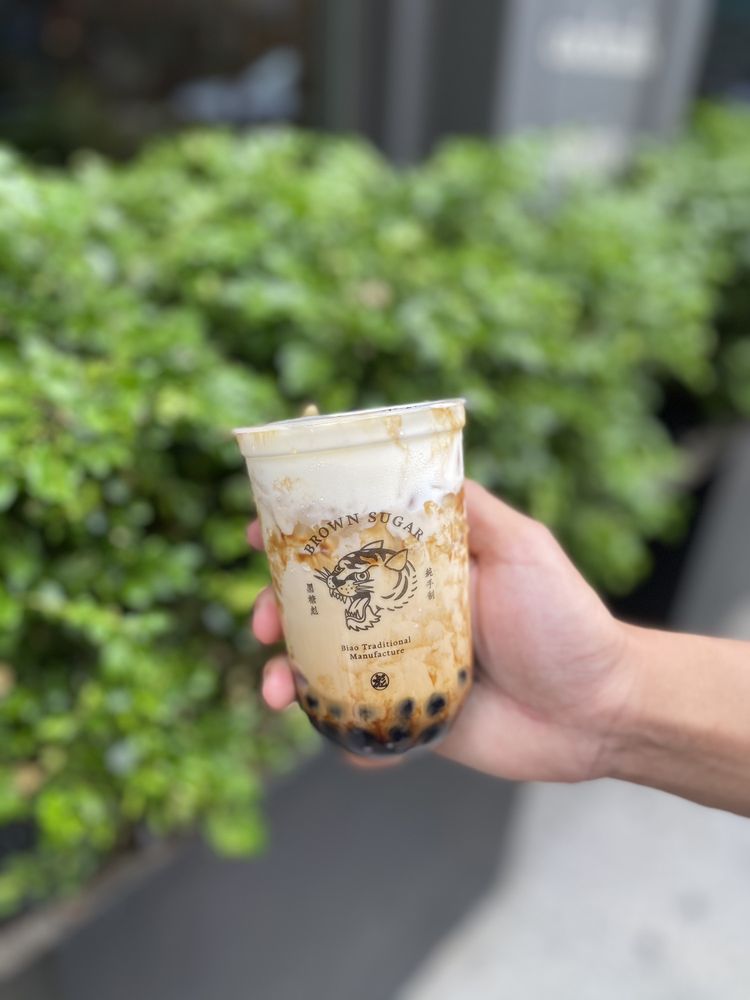
- Tiger milk — milk and brown sugar syrup, no actual tea. (Technically not a milk tea at all, but sold alongside.)
- Roasted oolong milk tea, different tea base than classic boba, toastier flavor.
- Houjicha milk tea, roasted Japanese green tea, lower caffeine.
All of these can be served with or without pearls. Without pearls, they’re milk teas; with pearls, they’re boba.
Calories and sugar, head to head
A 16-oz pour of each, at typical preparation:
- Hong Kong milk tea with condensed milk, unsweetened further: 200-280 calories, 18-30 g sugar.
- Taiwanese pearl milk tea (classic, 100% sweet): 350-450 calories, 50-65 g sugar.
- Teh tarik: 280-360 calories, 30-40 g sugar.
- Masala chai with whole milk and 1 tsp sugar: 120-180 calories, 12-18 g sugar.
The pearls are the main reason boba runs high on calories. Condensed milk is the main reason Hong Kong and Malaysian versions still aren’t light.
Which one to order, situationally
If you want the strongest, creamiest, least-sweet of the cold options: Hong Kong milk tea. If you want pearls and customization: boba. If you want spice and warmth: masala chai. If you want something unusual visually: cheese tea. If you’ve only ever had boba: try Hong Kong or teh tarik next, you might find they’re what you actually wanted all along.
The Venn diagram
All four of Hong Kong milk tea, teh tarik, masala chai, and classic Taiwanese boba are milk teas. Only boba has pearls. Each one has a distinct tea blend, milk, sweetener, and preparation method that makes it identifiable in a blind taste test.
Calling all of them “milk tea” is correct but unhelpful, like calling bourbon and tequila “brown liquor.” Calling boba “bubble tea” or “pearl milk tea” or “Taiwanese milk tea with tapioca” all work. Calling it “milk tea” by itself is ambiguous — you’ll get one of five different drinks depending on where you’re standing.
Bottom line
Milk tea is the broad category. Boba is the specific Taiwanese subtype with tapioca pearls. Hong Kong milk tea, teh tarik, masala chai, and Taiwanese plain milk tea are all milk teas that aren’t boba. If someone says they prefer milk tea over boba, the most likely interpretation is that they don’t like the pearls, the drink without them is still identifiably a milk tea, just a quieter one.
Most boba menus have a “milk tea, no pearls” option. That’s Taiwanese milk tea. If you want the real Hong Kong or Malaysian versions, you need a different kind of shop.