Topping chooser
Pick between tapioca, popping boba, and crystal boba
Choose the drink style and texture you want. The result gives the topping that fits best before you order.
Classic milk tea works best with a chewy topping that can stand up to milk and tea.
Quick comparison
| Topping | What it is | Texture | Best drinks | Typical calories per serving |
|---|---|---|---|---|
| Tapioca pearls | Cassava-starch pearls, usually cooked and soaked in syrup | Chewy, dense, springy | Classic milk tea, brown sugar milk, Thai tea | About 150-200 |
| Popping boba | Juice or syrup inside a thin gel membrane | Juicy burst, little chewing | Fruit tea, lemonade, slushes, yogurt drinks | About 60-80 |
| Crystal boba | Konjac or agar jelly pearls | Soft, jelly-like, mild | Green tea, oolong, fruit tea, lighter milk tea | About 30-50 |
If you want the standard boba-shop texture, order tapioca pearls. If you want flavor to burst in a fruit drink, order popping boba. If tapioca feels too heavy but you still want a topping, order crystal boba.
Tapioca pearls
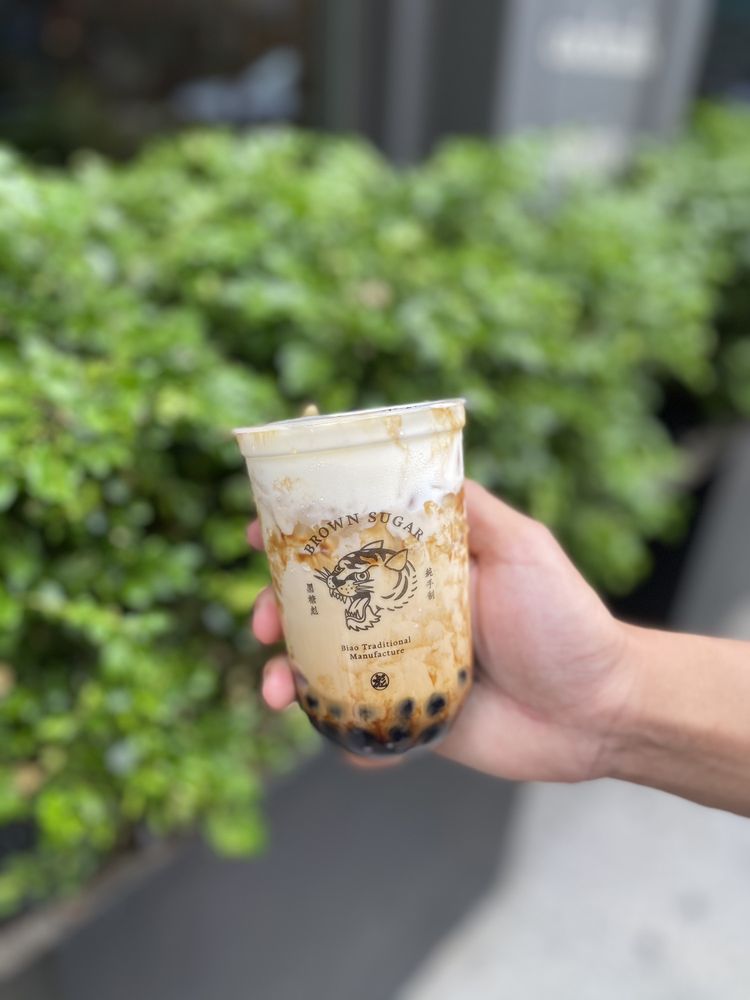
Tapioca pearls are marble-sized balls made from cassava starch. Shops boil them until chewy, then hold them in sugar syrup. The color is usually dark brown or black from brown sugar or caramel coloring, but the starch itself is light before it is cooked.
Texture: chewy, dense, slightly springy. Tapioca sinks to the bottom of the cup and needs real chewing. It also has the shortest quality window. Pearls older than a few hours can turn hard, mushy, or stale depending on how they were held.
Flavor: neutral-sweet. The syrup they’re soaked in does most of the flavor work.
Calories: about 150-200 per standard topping serving, mostly from starch and syrup.
Best with: classic milk teas, brown sugar boba, Thai tea, taro milk tea, matcha milk tea, coffee milk tea, and anything where you want a substantial chew.
Worst with: delicate fruit teas where the syrup flavor of the pearls fights the fruit.
Popping boba
Popping boba are juice-filled spheres made with a thin gel membrane. When you bite them, they pop and release the liquid inside. They are sometimes called bursting boba, popping pearls, juice balls, or popping bubbles.
Texture: thin-skinned, bursts with a soft pop. No chewing needed; they rupture on light tongue pressure. Floats or stays suspended, lighter than tapioca.
Flavor: whatever flavor they’re filled with. Common flavors: mango, strawberry, lychee, peach, passion fruit, yogurt. Some are sour, some are sweet. The membrane itself is tasteless.
Calories: about 60-80 per standard serving, mostly from sugar in the filling.
Best with: fruit teas, lemonades, slushies, yogurt-based drinks. Matches fruit-forward flavors instead of fighting them.
Worst with: rich milk teas, the liquid-fruit burst feels weird against creamy milk.
One practical use: popping boba is easier than tapioca if you do not like chewy textures or want something gentler on your jaw.
Crystal boba (white pearls)
Crystal boba is a translucent jelly pearl usually made from konjac or agar. It is not the same as tapioca. Some shops call it white pearl, agar boba, or konjac boba.
Texture: jelly-like, softer than tapioca, more substantial than popping. Holds shape well, doesn’t dissolve. Doesn’t need chewing but has a pleasant mouthfeel.
Flavor: very mild. Usually subtly sweet from a light syrup bath, sometimes flavored with coconut or lychee. Doesn’t dominate the drink.
Calories: about 30-50 per standard serving, depending on the brand and syrup.
Best with: fruit teas, lighter drinks, fresh fruit additions where you don’t want the topping to compete.
Worst with: when you specifically want chewy mouthfeel, crystal can feel too wimpy.
Worth noting: crystal boba is usually the easiest swap when tapioca feels too heavy. It still has sweetness, but the texture is lighter and less starchy.
Other toppings worth mentioning
Jellies such as lychee, coconut, grass, and rainbow jelly are usually strips or cubes rather than pearls. Lychee jelly adds a floral-sweet bite. Grass jelly is darker and slightly bitter. Coconut jelly is firmer and cleaner-tasting.
Pudding is a soft custard-style topping. It works in Hong Kong-style milk tea, coffee milk tea, and some brown sugar drinks. It is awkward in most fruit teas.
Aloe vera is usually diced aloe pulp in syrup. It is soft, lightly grassy, and often one of the lighter toppings.
Basil seeds and chia seeds hydrate in the drink and form a thin gel around each seed. The texture is unusual but works in lighter fruit drinks.
Red bean is a sweetened bean topping used in milk tea, shaved ice, and dessert drinks. It is heavier than jelly or popping boba.
Cheese foam, milk foam, and creama sit on top of the drink rather than at the bottom. They matter for calories and flavor, but they do not replace pearls or jelly.
Calorie comparison at a glance
Per typical topping serving (an order of “extra [topping]”):
| Topping | Typical range |
|---|---|
| Tapioca pearls | 150-200 calories |
| Popping boba | 60-80 calories |
| Crystal boba | 30-50 calories |
| Lychee jelly | 40-60 calories |
| Pudding | 80-120 calories |
| Aloe vera | 15-30 calories |
| Grass jelly | 25-45 calories |
| Basil seeds | 5-10 calories |
Halving the pearl portion, or swapping pearls for aloe, can cut 100+ calories from a drink without changing anything else.
Which topping for which drink
| Drink | Best topping |
|---|---|
| Classic milk tea | Tapioca pearls |
| Brown sugar boba | Brown sugar tapioca pearls |
| Thai tea | Tapioca or pudding |
| Matcha milk tea | Tapioca, mini tapioca, or red bean |
| Mango, passion fruit, or peach tea | Popping boba or crystal boba |
| Lemonade or sour fruit tea | Popping boba |
| Green tea or oolong without milk | Crystal boba or lychee jelly |
| Taro milk tea | Pudding or tapioca |
| Coffee milk tea | Pudding or tapioca |
| Lower-calorie order | Aloe vera, basil seeds, or crystal boba |
Is tapioca the same as boba?
Tapioca is not exactly the same as boba. Tapioca is the cassava starch used to make the classic chewy pearls. Boba can mean those tapioca pearls, but many people also use “boba” to mean the whole bubble tea drink. That is why “tapioca vs boba” searches are confusing: most of the time, people are comparing tapioca pearls with other boba toppings.
Tapioca pearls vs popping boba
Tapioca pearls are better when you want chew. Popping boba is better when you want fruit flavor. Tapioca is cooked, starch-based, and usually served in milk tea. Popping boba is ready to scoop, juice-filled, and usually served in fruit tea.
For home use, popping boba is easier because it does not need cooking. Tapioca tastes closer to a tea shop when it is fresh, but it needs boiling, resting, rinsing, and syrup timing.
Popping boba vs crystal boba
Popping boba is for flavor. Crystal boba is for texture. Popping boba bursts with juice and can change the drink’s flavor. Crystal boba is milder, softer, and better when you want a topping that does not dominate the tea.
Use popping boba in mango green tea, strawberry lemonade, passion fruit tea, or slushes. Use crystal boba in jasmine tea, oolong tea, lychee tea, or lighter milk tea.
Source notes
Bubble tea started as a Taiwanese tea drink with chewy tapioca pearls. Modern menus now use a wider set of toppings, including popping boba, crystal boba, jelly, pudding, aloe, and foam. For deeper background, see the site ingredient guides for tapioca pearls, popping boba, lychee jelly, grass jelly, and pudding.
Useful external background:
Bottom line
Three different toppings, three different jobs. Tapioca is the default for milk tea. Popping boba is the better match for fruit tea. Crystal boba is the lighter middle option when you still want texture.
If you have only ordered tapioca, try popping boba in a fruit tea next. Mango, strawberry, lychee, and passion fruit are usually the safest first picks.
What is the difference between tapioca pearls and boba?
Tapioca pearls are the chewy cassava-starch balls inside classic bubble tea. Boba can mean those pearls, but it can also mean the full drink. If someone says “add boba,” they usually mean tapioca pearls. If they say “get boba,” they usually mean bubble tea.
What is the difference between boba and popping boba?
Boba usually means chewy tapioca pearls. Popping boba means juice-filled pearls that burst when bitten. Tapioca boba is starch-based and works best in milk tea. Popping boba is gel-coated and works best in fruit tea, lemonade, slushes, and yogurt drinks.
Is popping boba better than tapioca pearls?
Popping boba is better for fruit flavor and convenience. Tapioca pearls are better for classic chew and milk tea. One is not universally better. The right choice depends on whether you want a chewy topping or a juicy topping.
Are tapioca pearls healthier than popping boba?
Popping boba usually has fewer calories per serving than tapioca pearls, but it is still a sweet topping. Tapioca is mostly starch and syrup. Popping boba is mostly sweet filling inside a gel membrane. For a lighter order, use less topping or choose aloe, basil seeds, or crystal boba.
Does crystal boba taste like tapioca?
No. Crystal boba is softer, milder, and more jelly-like than tapioca. It does not have the same dense chew. It is a good choice when tapioca feels too heavy or when you want a topping for lighter tea.