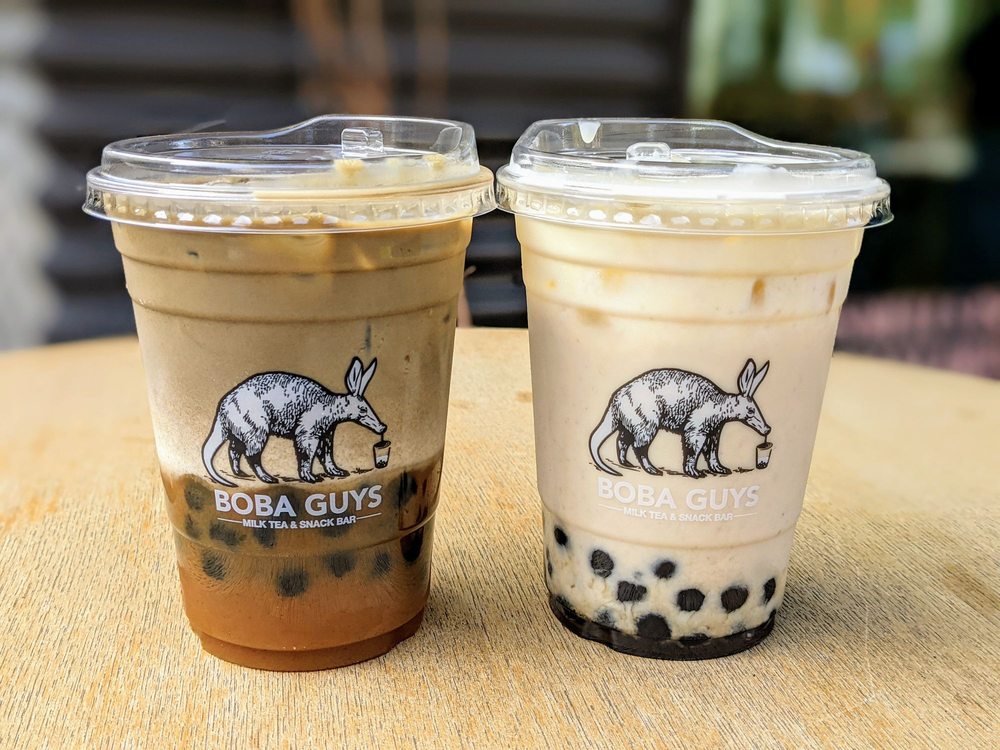
What brown sugar boba actually is
Regular boba pearls are boiled in water, then soaked in sugar syrup (usually white sugar and some honey or brown sugar for color). The pearls stay somewhat neutral in flavor. The drink around them does the sweetening work.
Brown sugar boba pearls are simmered or glazed in heavy brown sugar syrup, sometimes just muscovado, sometimes a blend of brown sugar and molasses, sometimes with a touch of salt. The pearls end up deeply colored, sticky, and actively sweet on their own. The syrup is painted on the inside of the cup in long dark streaks before the milk is poured in, which is how you get the “tiger stripe” look.
The drink is usually served unstirred, so the first sips are milk and the later sips get progressively sweeter. Straw discipline matters. Tiger Sugar specifically tells you not to stir the drink.
Because of the pearl preparation and the syrup-on-cup technique, a brown sugar boba is almost always more sugar than a regular version. Different product, not just different label.
How brown sugar pearls are made
The process at a decent shop:
- Tapioca pearls cooked in boiling water for 20-30 min until the chew is right.
- Drained, rinsed.
- Transferred to a thick brown sugar reduction (sometimes with molasses or jaggery added).
- Simmered in the syrup for another 10-20 min until the pearls absorb the color and flavor.
- Held warm in the syrup until ordered.
When you order, the shop ladles pearls plus extra syrup into the cup, paints the walls with more syrup, adds ice, pours milk over. No shaking.
Regular pearls skip most of step 4. They just sit in a lighter sugar-water to stay moist.
Taste difference
Regular boba pearls: neutral-sweet, chewy, they take the flavor of whatever drink surrounds them.
Brown sugar boba pearls: caramel, slight smokiness, molasses notes, faintly salty at good shops. They taste like something on their own.
Brown sugar boba milk (the full drink): the first sip is nearly plain milk, the last sip can be almost syrup. Somewhere in the middle you get a balanced caramel-milk flavor. If you stir it, the whole drink becomes a uniform medium-sweet caramel milk, still good, but the texture and visual layering are gone.
People who don’t like brown sugar boba tend to say it’s too sweet, the pearls are too dominant, and the unmixed layering feels gimmicky. People who love it tend to say it’s the best version of the drink. Both camps are right about their own experience.
Calorie and sugar comparison
A standard 16-oz pour:
Regular black milk tea + pearls, 100% sweet:
- 350-420 calories
- 48-60 g sugar
Brown sugar boba milk (Tiger Sugar style):
- 400-520 calories
- 70-90 g sugar
The extra 20-30 g of sugar comes from two places: the syrup pre-coated in the cup (10-15 g) and the pearls’ own sugar load (an additional 10-15 g over regular pearls).
Worth saying out loud: an average brown sugar boba delivers more sugar than a 20-oz Coca-Cola (65 g). You can reduce it by asking for less syrup or using milk alternatives, but the floor is still around 45-55 g even at the lightest.
Is brown sugar boba healthier?
No, and the marketing that suggests otherwise is misleading. Brown sugar is still sugar — the mineral content is rounding-error small, and the extra trace molasses doesn’t offset the higher total dose. Glycemic load is slightly lower than pure white sugar, but not meaningfully so at the quantities used here.
There’s one small win: the higher concentration of sugar around the pearls means you taste sweetness quickly, so some people naturally drink less of the cup. Small behavioral effect. Doesn’t change the macros.
If you want a lower-sugar version, skip the syrup coating and ask for regular pearls with a light brown sugar topping. Most shops can do this. The drink won’t have the tiger stripe, but the flavor profile is close enough.
Best brown sugar boba brands
Tiger Sugar, the original, Taiwan-based, credited with the trend. Syrup is on the sweeter side. Most consistent tiger-stripe visual.
The Alley, closer competitor, sometimes better texture on the pearls (they advertise “deerioca”). Syrup slightly less sweet.
Xing Fu Tang — best theatrical presentation, pearls often torched tableside. Sugar load similar to Tiger.
Tiger Cream (Tiger Sugar’s sub-brand), brown sugar plus cream cheese foam. Very sweet, not for everyone.
Machi Machi, more balanced, less aggressive on the syrup.
Independent shops vary wildly. Some make theirs too heavy. A few specialty places in LA and the Bay Area make brown sugar boba with muscovado and a pinch of salt that’s genuinely better than the chain versions.
Bottom line
Brown sugar boba is a legitimately different drink from regular boba — different pearl preparation, different layering technique, substantially more sugar. It’s also richer, more caramelly, and more visually interesting. Whether the extra sugar and stickier mouthfeel are worth it is personal. If you want the drink as it’s meant to be, don’t stir it and drink it fairly quickly so you get the full gradient. If you want it lighter, skip the syrup coat and order regular boba with a brown sugar topping option.
Calling it “just boba with a different sugar” undersells the process. It’s closer to a different dessert.